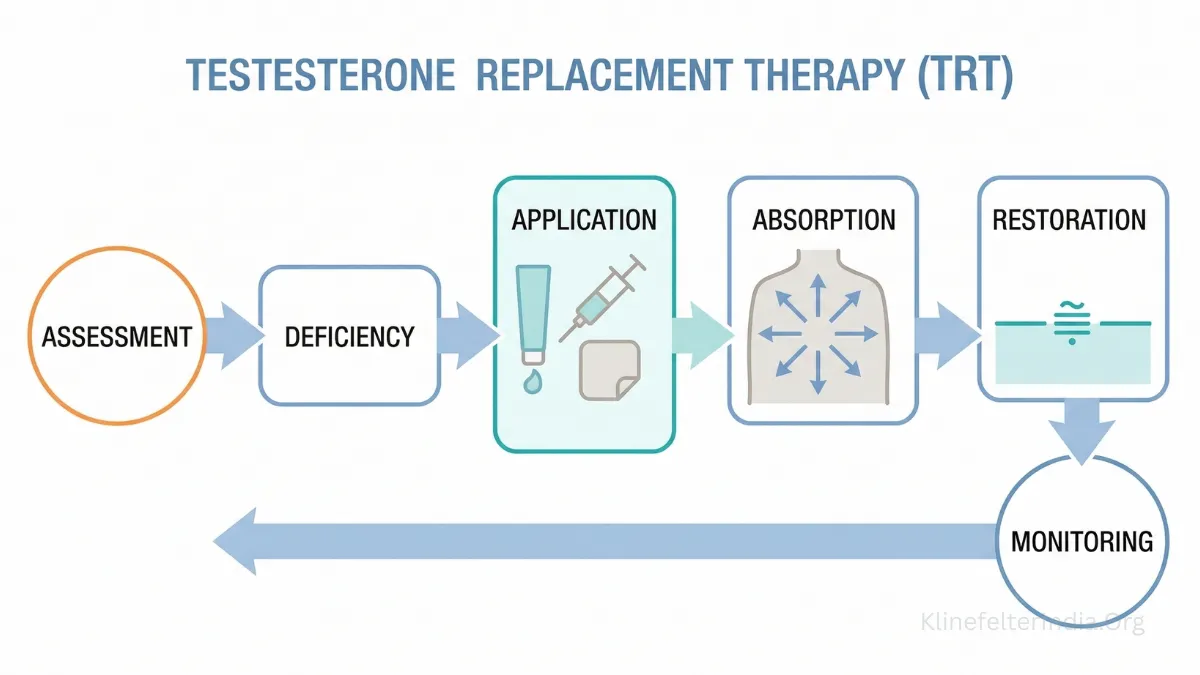
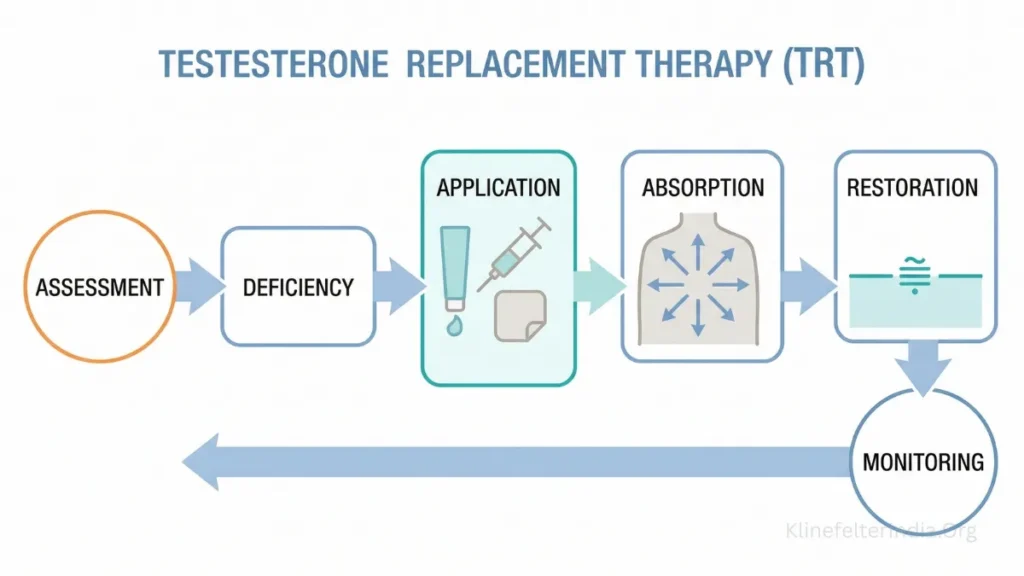
If you have been diagnosed with Klinefelter Syndrome, testosterone replacement therapy – commonly called TRT – is the primary treatment that can meaningfully improve your quality of life. This article explains what TRT is, what your options look like in India, what it costs, what benefits you can expect, and how the medical supervision process works. TRT is highly effective and affordable in India, but it requires an endocrinologist’s prescription and ongoing monitoring. This guide is designed to help you have informed conversations with your doctor, not to replace that conversation.
What is Testosterone Replacement Therapy?
Klinefelter Syndrome means your testes do not produce enough testosterone. TRT replaces what your body cannot make on its own, bringing hormone levels into the normal male range. Think of it the same way you would think of insulin for someone with type 1 diabetes – you are restoring a hormone your body cannot produce adequately, not taking something it does not need.
It is worth being clear about what TRT is not. It is not the same as anabolic steroid use. It does not cure Klinefelter Syndrome – the extra X chromosome remains. It does not restore natural sperm production. And it does not work overnight. Full benefits typically take three to six months to develop. What it does do is address the consequences of low testosterone directly and, for most men, the difference is significant.
For men with Klinefelter Syndrome, TRT is typically a lifelong commitment. This is not a cause for concern – it is safe when properly prescribed and monitored, and millions of men worldwide use it successfully. In India, it is both affordable and accessible through qualified endocrinologists[1].
Your TRT Options in India
Your endocrinologist will recommend a treatment type based on your medical needs, lifestyle, and budget. The table below compares all five delivery methods available in India.
[IMAGE: A clean visual showing five treatment delivery methods side by side – injection, gel tube, capsule, patch, and implant pellet – illustrated in minimal icon-style format. Teal and white palette. No text in image.]
| Type | Frequency | Monthly Cost | Hormone Levels | India Availability |
|---|---|---|---|---|
| Injectable | Every 3-6 weeks | ₹500-900 | Moderate fluctuation | Widely available |
| Gel | Daily | ₹2,000-3,000 | Steady | Available |
| Oral | 2-3x daily | ₹800-1,500 | Variable | Available |
| Patches | Daily | ₹3,000-5,000 | Steady | Limited |
| Pellets | Every 3-6 months | ₹15,000-30,000 | Very steady | Very rare |
Injectable testosterone is by far the most commonly prescribed form in India, used by an estimated 80 to 85 percent of men on treatment here. It is administered into the muscle every three to six weeks and is the most affordable option with one of the strongest long-term safety records. Testosterone gel produces steadier hormone levels but carries a transfer risk – partners and children should not touch the application site until dry. Oral testosterone is less effective due to variable absorption but avoids needles and gel entirely. Patches offer steady delivery but have limited availability and commonly cause skin irritation. Pellets are extremely rare in India and not a practical option for most men at this time.
What TRT Costs in India
The tables below cover injectable testosterone, which is what most men in India use. Year 1 costs are higher because of more frequent monitoring while your doctor establishes the right dose.
| Cost Category | Year 1 (₹) | Year 2+ (₹) |
|---|---|---|
| Medication (injectable) | 6,000-12,000 | 6,000-12,000 |
| Monitoring blood tests | 10,000-20,000 | 5,000-10,000 |
| Doctor consultations | 4,000-10,000 | 2,000-6,000 |
| TOTAL | 20,000-42,000 | 13,000-28,000 |
If you choose gel instead of injectable, add approximately ₹18,000 to ₹24,000 per year to the medication line. Monitoring and consultation costs remain the same regardless of which form you use. Government hospitals offer the same quality of care at 50 to 70 percent lower cost, with the trade-off of longer waiting times.
The monitoring blood tests below are not optional. They are what keep TRT safe and must not be skipped to reduce costs.
| Test | Frequency | Cost (₹) |
|---|---|---|
| Testosterone (total & free) | Every 3-6 months initially | 800-1,500 |
| Complete blood count | Every 6 months | 300-500 |
| Liver function | Every 6-12 months | 400-800 |
| Lipid panel | Every 6-12 months | 400-800 |
| PSA (age 40+) | Annually | 600-1,200 |
Private labs such as Thyrocare and Dr. Lal PathLabs offer all these tests at the costs shown above. Government hospital labs charge significantly less.
How Doctors Start and Monitor TRT
Starting TRT is a structured process, not a single appointment. Your endocrinologist will work through several stages before prescribing, and the monitoring continues for as long as you are on treatment.
Confirming You Are a Candidate
Before prescribing anything, your endocrinologist will verify a confirmed Klinefelter Syndrome diagnosis via karyotype test, low testosterone on at least two separate blood tests, symptoms consistent with low testosterone, and no contraindications that would make TRT unsafe for you.
Baseline Testing
A complete workup is done before treatment begins – testosterone levels, full hormone panel, blood counts, liver and kidney function, lipid profile, blood sugar, and PSA if you are over forty. This confirms it is safe to start and gives your doctor a reference point to measure your progress against.
Starting Treatment
Your doctor prescribes the appropriate type and dose, teaches administration techniques for injectable testosterone, sets a follow-up schedule, and ensures you have a contact for concerns. The first injection is often given in the clinic before you do it at home.
Monitoring and Adjustment
The first three months are the dose-finding phase. A blood test at six to eight weeks checks whether levels have reached the target range. Between months three and twelve, checks continue every three to six months. From year two onwards, monitoring moves to every six to twelve months and continues for life[2]. Most men notice energy improvements within one to two weeks, with full benefits apparent by months three to six. Bone density improvements take six to twelve months[2].
Why Medical Supervision is Non-Negotiable
Testosterone is a prescription medication in India, and purchasing it without a prescription is both illegal and genuinely dangerous. Without proper dosing, overdosing leads to blood thickening and cardiovascular strain. Underdosing means no benefits but ongoing risk. Without monitoring, dangerous complications develop undetected. Black market products also carry counterfeit and contamination risks.
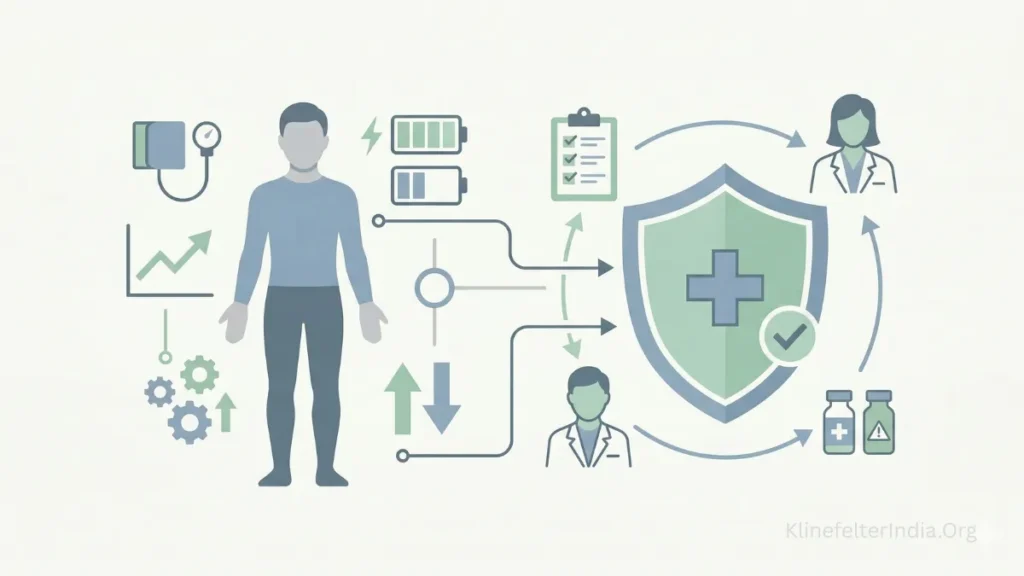
Your endocrinologist confirms the diagnosis, prescribes the right type and dose, monitors your bloods, and provides long-term oversight that no online source can replicate. Attend every follow-up, report side effects honestly, and follow the prescribed regimen exactly. That is the partnership that produces results safely.
What the Research Shows About TRT Benefits
For men with Klinefelter Syndrome, the evidence on TRT is consistent and encouraging[3]. Energy improves in 85 to 90 percent of men, muscle mass increases meaningfully, body fat decreases particularly around the abdomen, and bone density improves significantly. Libido and erectile function typically improve within the first six to eight weeks. Depression and anxiety, both more common in men with KS, reduce considerably with treatment for most men. Quality of life measures improve significantly in 85 to 90 percent of men with KS on TRT[4], and many describe feeling like themselves for the first time. Benefits are most pronounced when TRT is started before forty, but it is never too late.
Side Effects and Safety
TRT is very safe when properly monitored. Common mild effects include temporary acne or oily skin, mild fluid retention, and mood fluctuations if the dose is too high. The side effect your doctor watches most carefully for is polycythemia – blood thickening – detected through routine blood counts and managed through dose adjustment.
Prostate monitoring via PSA is recommended for men over forty, not because TRT causes prostate cancer – the evidence does not support that claim – but because testosterone can accelerate growth of an existing undetected issue. The risks of leaving low testosterone untreated in men with KS – osteoporosis, metabolic syndrome, cardiovascular disease, mental health burden – significantly outweigh the risks of properly supervised TRT[5].
Common Questions
Is TRT safe for lifelong use?
Yes, when properly monitored. Regular blood tests every six to twelve months allow your doctor to catch issues early. The long-term safety record of injectable testosterone is well established, and for men with KS the benefits consistently outweigh the risks of leaving low testosterone untreated.
Will TRT affect my fertility?
Yes. TRT suppresses the body’s hormone signals, reducing sperm production further. If you want biological children, discuss fertility preservation before starting TRT. Options include sperm banking and micro-TESE, covered in detail in the Fertility Options Guide. Once fertility treatment is complete, TRT can begin without this concern.
Can I stop TRT once I start?
You can stop, but testosterone returns to its previous low levels and symptoms return. For men with KS, the testes are not going to begin producing adequate testosterone on their own. TRT is considered lifelong for most men with KS. If you need to pause for any reason, do so in discussion with your endocrinologist.
How quickly will I feel better?
Energy and mood improvements typically begin within one to two weeks. Libido improves by weeks three to six. Full benefits – muscle mass, body composition, mental clarity – develop over three to six months. Your endocrinologist reassesses at three months and adjusts the dose if needed.
What to Do Next
Start by finding an endocrinologist with experience in male hormone disorders. The Finding a KS Doctor in India guide has practical advice on identifying the right specialist in your city and what to ask at your first consultation.
At that first appointment, bring your karyotype result and any previous blood test reports. Your doctor will order baseline testing before prescribing – budget approximately ₹3,000 to ₹6,000 for this workup. From consultation to starting treatment typically takes one to two weeks once baseline results are in.
Once treatment begins, attend every follow-up and never skip monitoring blood tests. Report side effects honestly and promptly. From starting TRT to feeling meaningfully better typically takes six to twelve weeks for initial improvements and three to six months for the full picture.
For further reading: the What is Klinefelter Syndrome guide covers the condition in full, the Fertility Options Guide is essential before starting TRT if children are part of your plans, and the First 90 Days After Diagnosis guide gives you a practical week-by-week roadmap.
1. Nieschlag E, Behre HM, Bouchard P, et al. Testosterone replacement therapy: current trends and future directions. Human Reproduction Update. 2004;10(5):409-419.
2. Rohayem J, Fricke R, Czeloth K, et al. Age and markers of Leydig cell function, but not of Sertoli cell function predict the success of sperm retrieval in adolescents and adults with Klinefelter’s syndrome. Andrology. 2016;3(5):868-875.
3. Groth KA, Skakkebaek A, Host C, Gravholt CH, Bojesen A. Klinefelter syndrome – a clinical update. Journal of Clinical Endocrinology and Metabolism. 2013;98(1):20-30. pubmed.ncbi.nlm.nih.gov/23118427
4. Zitzmann M, Depenbusch M, Gromoll J, Nieschlag E. X-chromosome inactivation patterns and androgen receptor functionality influence phenotype and social characteristics as well as pharmacogenetics of testosterone therapy in Klinefelter patients. Journal of Clinical Endocrinology and Metabolism. 2004;89(12):6208-6217.
5. Bojesen A, Gravholt CH. Klinefelter syndrome in clinical practice. Nature Clinical Practice Urology. 2007;4(4):192-204.
6. Endocrine Society Clinical Practice Guidelines. Testosterone therapy in men with hypogonadism. Journal of Clinical Endocrinology and Metabolism. 2018;103(5):1715-1744. pubmed.ncbi.nlm.nih.gov/29562364